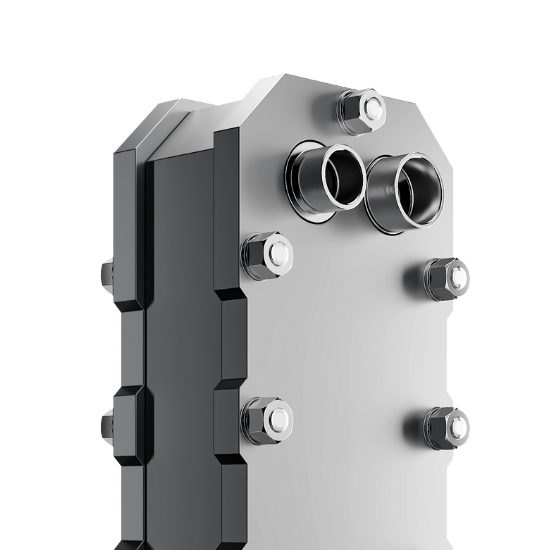

They’re an excellent choice for applications using carbon dioxide (CO₂) as the heat transfer medium.
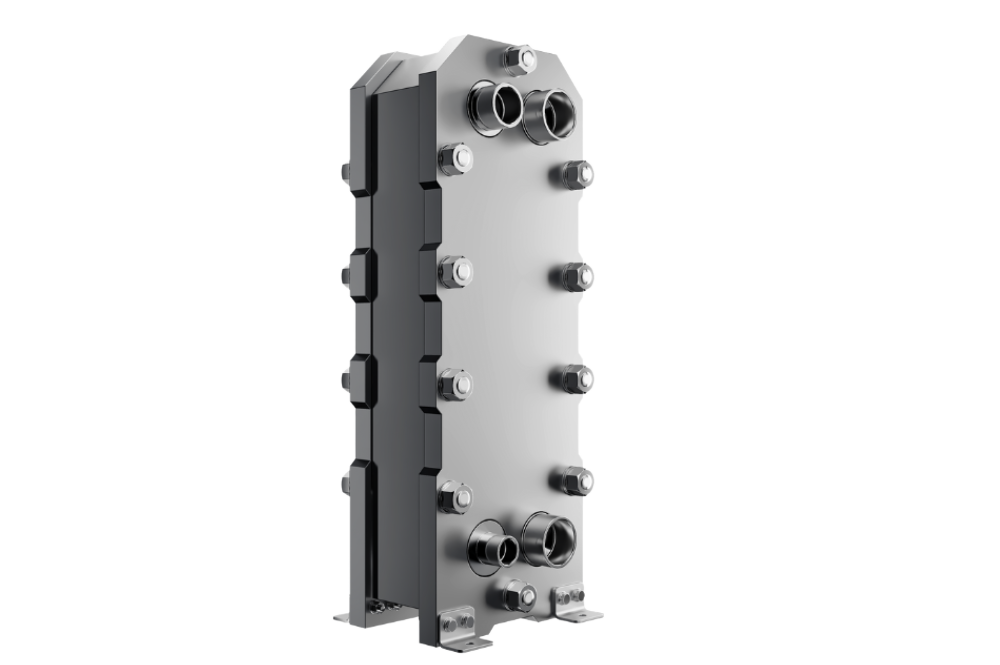
The HEXONIC L ULTRA is a purpose-engineered high-pressure brazed plate heat exchanger designed for transcritical CO2 (R744) refrigeration and heat pump systems. Rated for operating pressures up to 140 bar, the L ULTRA meets the demanding pressure requirements of CO2 gas cooler and evaporator duty that standard brazed plate heat exchangers cannot handle.
As EU F-Gas Regulations accelerate the phase-down of high-GWP HFC refrigerants, transcritical CO2 systems are becoming the standard for commercial refrigeration, heat pump water heaters, and industrial cold storage. The L ULTRA is designed from the ground up for this application — not a modified standard model.
Key Features
- 140 bar pressure rating: Rated for the full operating pressure range of transcritical CO2 systems, including peak pressures encountered at high ambient temperatures
- Purpose-designed plate geometry: Corrugation pattern and plate thickness are engineered specifically for CO2 two-phase heat transfer characteristics — evaporation, condensation, and supercritical gas cooling
- Compatible with all CO2 system configurations: Suitable for gas cooler (supercritical), evaporator (subcritical), and suction-line heat exchanger duty in transcritical CO2 circuits
- Compact and lightweight: Delivers high thermal performance in a small footprint, simplifying OEM integration and installation in compact systems
- Future-proof specification: CO2 (R744) has a GWP of 1 — entirely unaffected by current and future F-Gas refrigerant restrictions
Design
-
Connections
-
Copper or stainless LUNA brazing
-
Heating plates
-
Cover plates
-
Protection sheets
Technical Specifications
| Parameter | Specification |
|---|---|
| Design Standards | ASME; PED; UL |
| Max Design Pressure | L ULTRA — 140 BAR/ 2030 PSI LUNA ULTRA — 70 BAR/ 1015 PSI |
| Max Design Temperature | 150° C/302°F |
| Heating plates Materials | STAINLESS STEEL (1.4404 (AISI 316L) WITH COPPER OR STAINLESS (LUNA)BRAZING |
| Front and Rear Plate Materials | brazed plate hex Front and Rear Plate 1.4301 (AISI 304), additional frame PAINTED CARBON STEEL (CS) |
| Design Types | version with copper or stainless brazing |
| Connection Types | external thread / external thread (NPT): from 3/4″ to 2″ internal thread / internal thread (NPT): from 3/4″ to 5/4″ dual connections (external thread and soldering): from 3/4″ to 2″ Victaulic: from 3/4″ to 3/2″ flange: DN80 PN40 Type 11B / ANSI B16.5 3″ Class 300 SORF soldering connection for R heat exchangers: from 1/4″ to 3 5/8″ |
| Certification | ASME; PED; UL |
Applications








Frequently Asked Questions
Transcritical CO2 systems operate at high-side pressures of 75–140 bar — three to five times the pressure of conventional HFC refrigerant systems. Standard brazed plate heat exchangers rated to 30–45 bar cannot be used safely in this pressure regime. The L ULTRA features reinforced plate geometry, strengthened connection ports, and a precision brazing specification that maintains structural integrity throughout the CO2 operating pressure range.
No. Standard L series models are rated to 45 bar and must not be used in transcritical CO2 circuits. The L ULTRA is the correct specification for CO2 duty. Always verify the pressure rating before specifying any heat exchanger for a CO2 system.
In subcritical operation, CO2 behaves like a conventional refrigerant — evaporating at low pressure and condensing at high pressure. In transcritical operation (which occurs when the ambient temperature is too high for condensation), the high-pressure side operates above CO2’s critical point (31.1°C, 73.8 bar) — the refrigerant becomes a supercritical fluid rather than condensing, and the heat rejection device is called a gas cooler rather than a condenser.
The L ULTRA is designed specifically for CO2 and high-pressure applications. For propane (R290) systems, which operate at much lower pressures, the standard HEXONIC R series is typically the correct specification. Contact the HEXONIC engineering team to confirm the optimum model for your specific refrigerant and system conditions.