The refrigeration and heat pump industry is undergoing one of its most significant transitions in decades. Driven by tightening F-gas regulations in Europe and globally, system designers and OEMs are rapidly moving away from high-GWP synthetic refrigerants — HFCs like R410A and R134a — towards natural alternatives. And the natural refrigerant attracting the most attention is CO2, also known as R744. The challenge: CO2 refrigeration systems operate at pressures far beyond what conventional heat exchangers are designed for. That has made the development of purpose-built, high-pressure brazed plate heat exchangers one of the most critical engineering priorities in the sector.
Why CO2 (R744)?
CO2 is a natural refrigerant with a Global Warming Potential (GWP) of just 1 — compared to 2,088 for R410A and 1,430 for R134a. It is non-flammable, non-toxic, inexpensive, and available worldwide. The EU F-Gas Regulation is progressively restricting HFCs, making CO2 and other natural refrigerants increasingly the only viable long-term option for many applications.
CO2 is already widely used in commercial supermarket refrigeration (transcritical systems), heat pumps, industrial cold storage, and data centre cooling. Adoption in residential heat pumps is accelerating rapidly.
The Challenge: Transcritical Operating Pressures
In a transcritical CO2 system, the high-pressure side of the refrigeration circuit — where the gas cooler operates — runs at pressures between 75 and 120 bar in normal operation. Peak pressures during high ambient temperatures can reach 130–140 bar. This is 3–5x higher than the operating pressures of HFC systems using conventional brazed plate heat exchangers, which are typically rated to 30–45 bar.
This means that standard brazed plate heat exchangers simply cannot be used in transcritical CO2 systems without risking catastrophic failure. Purpose-engineered high-pressure models are essential.
What Makes a CO2-Rated Brazed Plate Heat Exchanger Different?
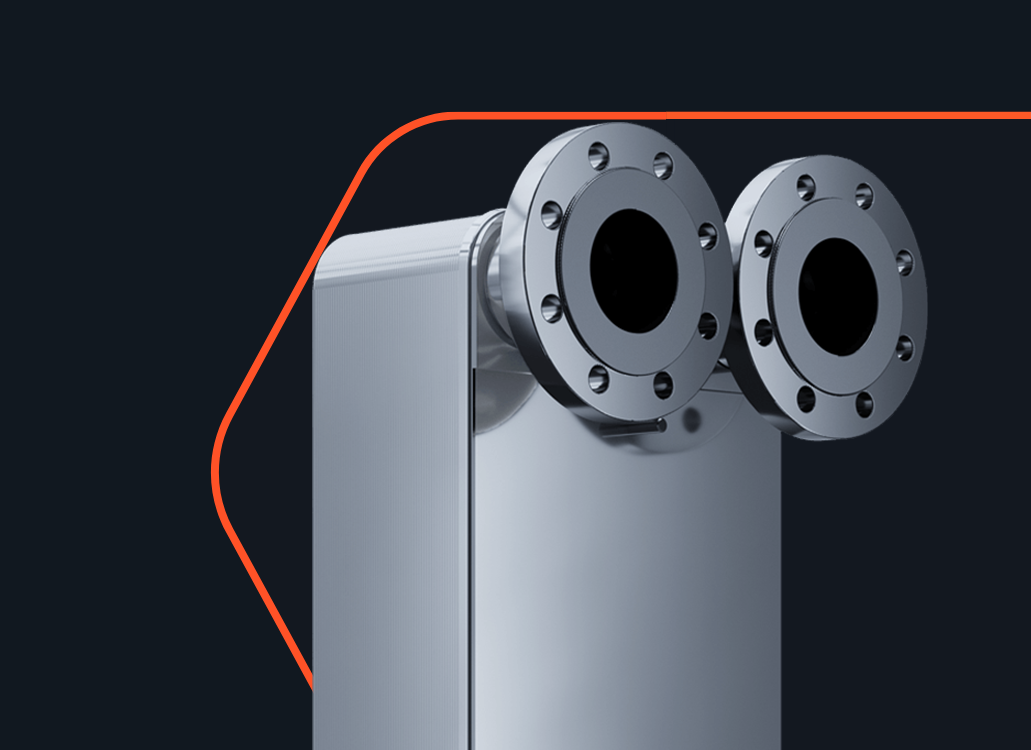
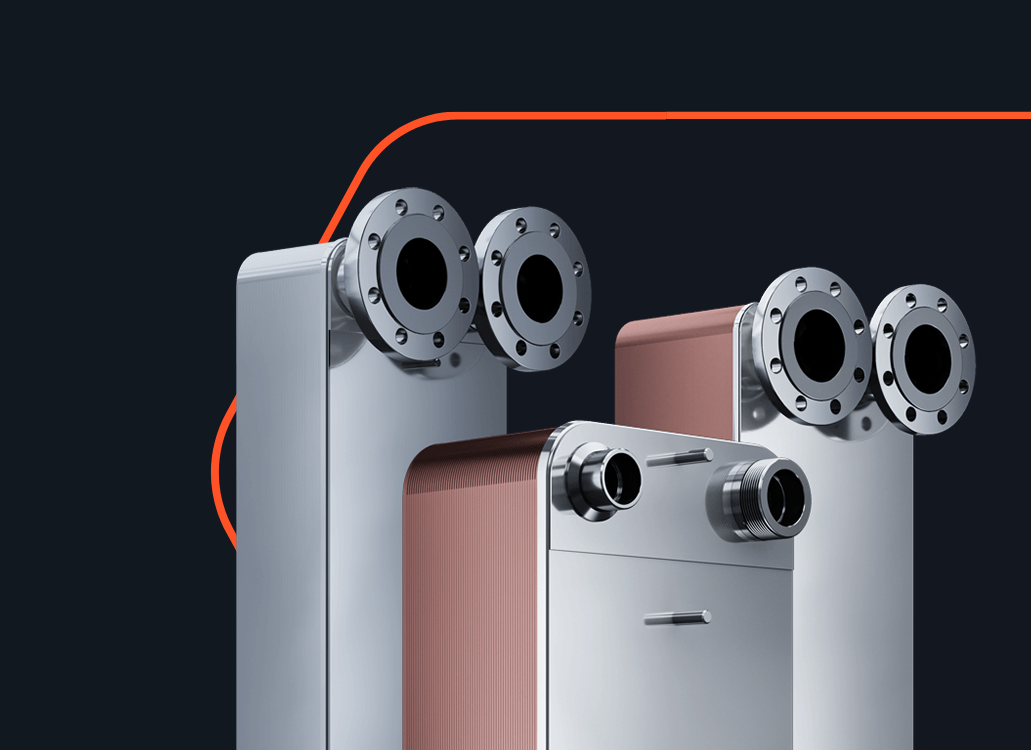
High-pressure CO2 brazed plate heat exchangers like the HEXONIC L ULTRA are designed from the ground up for transcritical refrigeration duty. Key design differences include:
- Reinforced plate geometry — corrugation patterns and plate thickness are optimised to withstand extreme cyclical pressure loading without fatigue failure
- Higher-grade brazing material — the vacuum brazing process uses precise copper alloy formulations that maintain structural integrity at CO2 pressures
- Strengthened connection ports — inlet and outlet connections are designed for high-pressure refrigerant piping and are tested to relevant pressure standards
- Tighter manufacturing tolerances — plate stacking, brazing quality, and dimensional accuracy are held to tighter standards to ensure no weak points
- Pressure rating up to 140 bar — the HEXONIC L ULTRA is rated for operating pressures up to 140 bar on the refrigerant side
Applications for High-Pressure CO2 Heat Exchangers
CO2-rated brazed plate heat exchangers are used in a rapidly growing range of applications:
- Transcritical CO2 gas coolers in commercial refrigeration systems
- CO2 heat pump water heaters — particularly high-temperature heat pumps producing water at 70–90°C
- Industrial CO2 refrigeration for food storage, brewing, and cold chain logistics
- Data centre liquid cooling using CO2 refrigerant loops
- District heating heat pumps using CO2 as the refrigerant
Sizing and Selection Considerations
Selecting the right CO2 brazed plate heat exchanger requires careful attention to several parameters that differ from conventional refrigerant systems:
- Operating pressure range — define minimum, maximum, and peak pressures for both circuits
- Transcritical vs subcritical duty — gas cooler (supercritical) and evaporator (subcritical) duties require different plate optimisation
- Approach temperature — CO2 gas coolers can achieve very low approach temperatures, maximising COP
- Refrigerant flow regime — CO2 has different two-phase heat transfer characteristics to HFCs; selection software must account for this
HEXONIC’s CAIRO online selection software enables accurate sizing of CO2 heat exchangers for transcritical and subcritical duty. The engineering team can support complex selection requirements directly.
The Regulatory Outlook
The EU F-Gas Regulation revision — which took effect in stages from 2024 — sets out an accelerating phase-down of HFCs by 2050, with significant restrictions already in force for refrigerants with GWP above 750 and 150. CO2, with its GWP of 1, is entirely unaffected by these restrictions.
For system designers and OEMs looking to future-proof their products, specifying CO2-compatible heat exchangers is no longer a niche decision — it is a core engineering requirement.
Explore the HEXONIC L ULTRA high-pressure CO2 brazed plate heat exchanger — designed for transcritical R744 systems up to 140 bar.
Contact our team for sizing support.
Frequently Asked Questions
What is the maximum pressure of the HEXONIC L ULTRA?
The HEXONIC L ULTRA CO2 brazed plate heat exchanger is rated for operating pressures up to 140 bar on the refrigerant side, making it suitable for the full range of transcritical CO2 system operating conditions.
Can a standard HEXONIC L series be used with CO2?
No. Standard L series models are rated to 45 bar and are not suitable for transcritical CO2 duty. The L ULTRA is the correct model for CO2 applications. Always confirm the pressure rating before specifying any heat exchanger for a CO2 system.
Are CO2 heat exchangers more expensive than standard models?
High-pressure CO2 models carry a price premium over standard brazed plate units due to the more demanding manufacturing requirements. However, the long-term regulatory compliance benefits and system efficiency gains make them the correct long-term investment for CO2 applications.