Heat exchangers are fundamental components of modern HVAC systems. Whether you are designing a district heating substation, a heat pump installation, a chiller plant, or a renewable energy system, the performance of the heat exchanger directly determines the efficiency, reliability, and energy consumption of the entire system.
This guide covers the key heat exchanger types used in HVAC applications, the selection criteria that matter most, and the common mistakes to avoid.
HVAC Heat Exchanger Applications
District Heating Substations
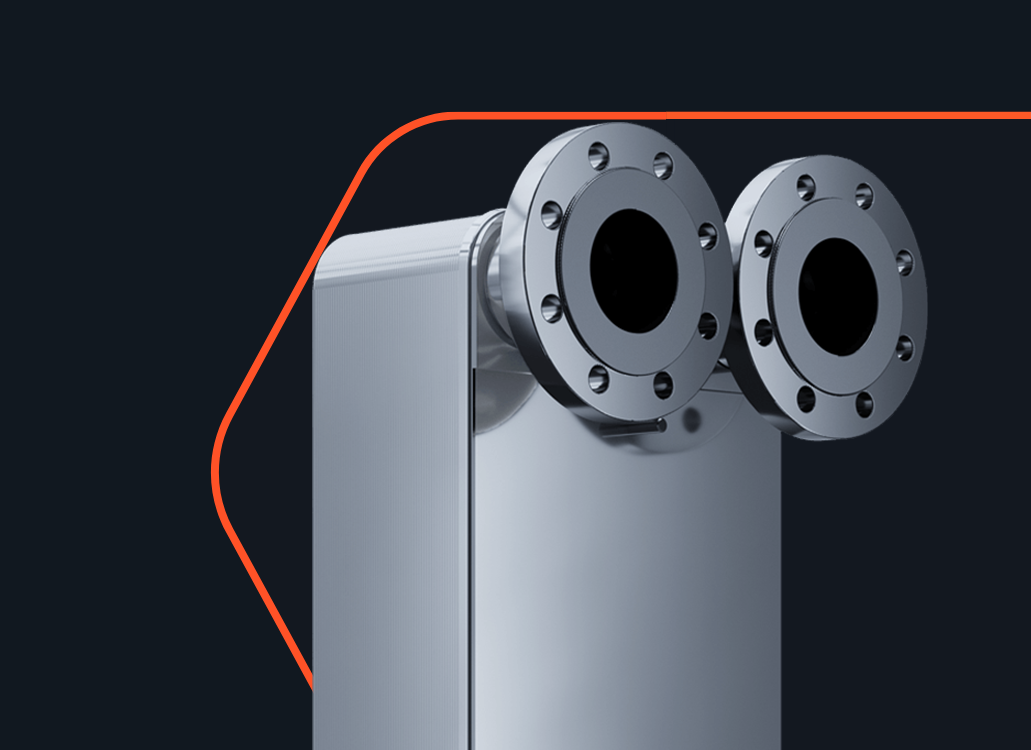
Plate heat exchangers — both brazed and gasketed — are the standard choice for district heating substations and heat interface units (HIUs). They thermally separate the district heating network from the building’s internal heating and hot water circuits, providing hydraulic isolation while enabling efficient heat transfer at low approach temperatures.
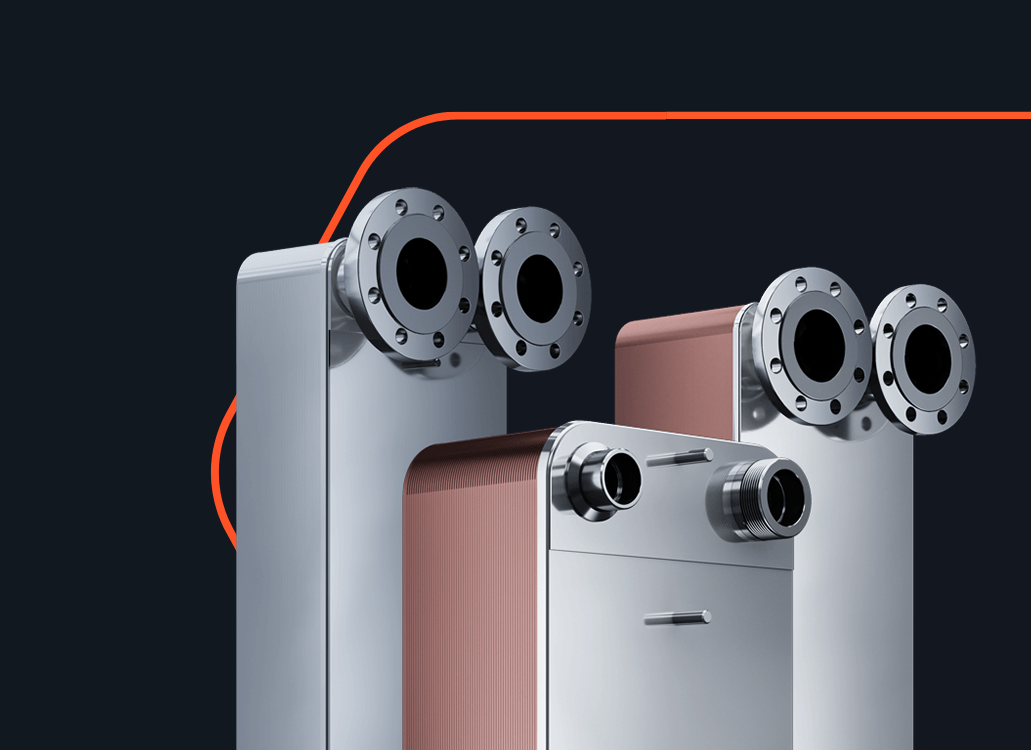
The typical HVAC specification for a substation plate exchanger calls for high thermal efficiency (close approach temperatures of 2–5°C), compact dimensions, and long service life with minimal maintenance. Brazed plate exchangers are commonly used for their durability and small footprint.
Heat Pumps
Heat pumps use heat exchangers in two critical roles: the evaporator (which extracts heat from the source — air, ground, or water) and the condenser (which delivers heat to the distribution system or hot water store). Both duties require carefully optimised heat exchangers.
For heat pump condensers serving underfloor heating or radiator circuits, brazed plate heat exchangers are the dominant choice. The HEXONIC AS asymmetric series is particularly well suited to heat pump condensers, where the refrigerant-side and water-side flow rates are significantly different — the asymmetric plate geometry delivers up to 18% higher efficiency in these conditions.
Chiller Plants and Cooling Systems
In chiller plant applications, plate heat exchangers serve as evaporators (chilling the water circuit) and condensers (rejecting heat to the cooling tower or dry cooler loop). Brazed plate models handle the refrigerant duties, while larger gasketed models are common on the water-side connections.
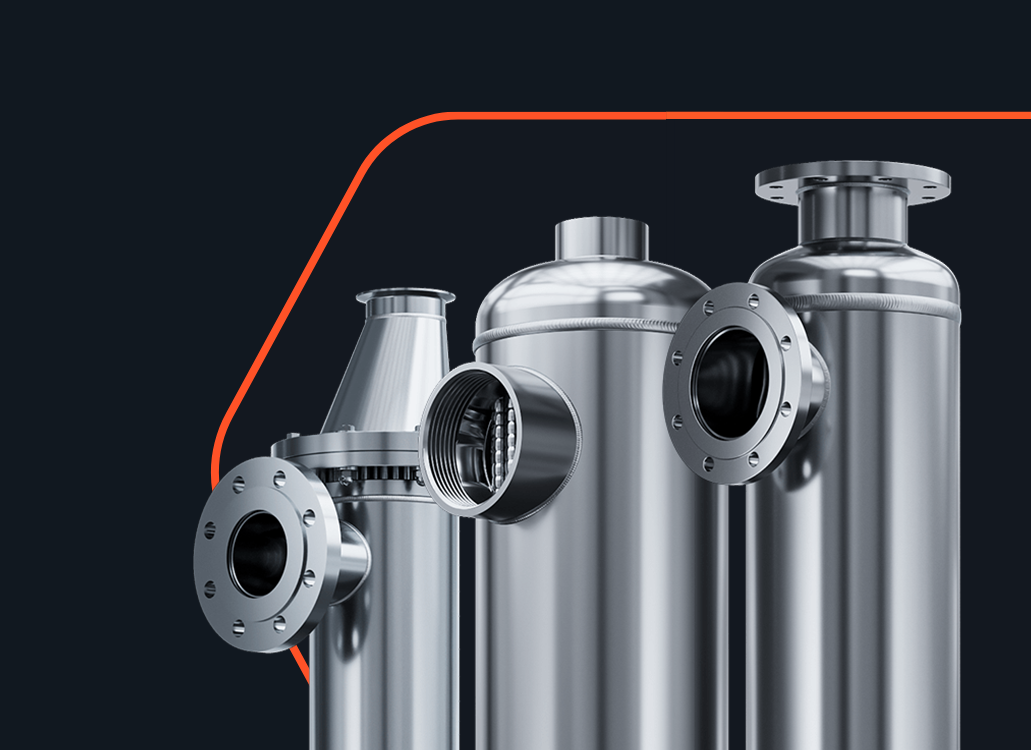
Dry coolers — finned coil heat exchangers using ambient air as the cooling medium — are used for heat rejection in free cooling applications and as dry cooler condensers. HEXONIC dry coolers are designed for outdoor installation with axial fan arrays and are sized for the specific climate conditions of the installation site.
Domestic Hot Water Preparation
Indirect domestic hot water (DHW) heating via a plate heat exchanger is the standard approach in all but the smallest residential systems. A compact brazed plate exchanger connected to the boiler or heat pump circuit heats cold mains water on demand, eliminating the need for a hot water storage cylinder in some configurations.
HEXONIC SafePLATE double-wall units are the recommended choice where there is a regulatory or safety requirement to prevent mixing of the primary heating circuit water with potable water.
Key Selection Criteria
1. Thermal Duty
The heat exchanger must be sized to transfer the required heat load (kW) at the specified inlet and outlet temperatures on both sides. The closer the approach temperature (difference between the two outlet temperatures), the larger and more efficient the heat exchanger required. Most HVAC applications target approach temperatures of 2–5°C.
2. Pressure Drop
Every heat exchanger creates a pressure drop on both fluid circuits, which affects pump sizing and energy consumption. The heat exchanger selection must balance thermal performance against an acceptable pressure drop for the system design.
3. Working Pressure and Temperature
The heat exchanger must be rated for the maximum operating pressures and temperatures it will encounter — including transient peak conditions. For refrigerant circuits, always check the maximum high-side pressure for the refrigerant type, including for CO2 systems.
4. Fluid Compatibility
Glycol-water solutions, inhibited water circuits, and refrigerants all have different material compatibility requirements. Standard copper-brazed BPHEs are compatible with most HVAC fluids. Applications involving ammonia, certain glycols, or chlorinated water (pools) require specific material selection.
5. Fouling and Maintenance Access
Clean, treated water circuits can use brazed plate or gasketed exchangers interchangeably. Applications with higher fouling risk — open cooling tower circuits, seawater, river water — typically require gasketed plate exchangers that can be disassembled and mechanically cleaned.
HEXONIC Products for HVAC Applications
- L Series Brazed Plate — district heating, DHW, general HVAC heat transfer
- R Series Brazed Plate — refrigerant evaporators and condensers in heat pumps and chillers
- AS Asymmetric Series — heat pump condensers with unequal flow rates
- L ULTRA — CO2 transcritical heat pumps and high-pressure refrigerant systems
- SafePLATE — potable water heating where cross-contamination prevention is required
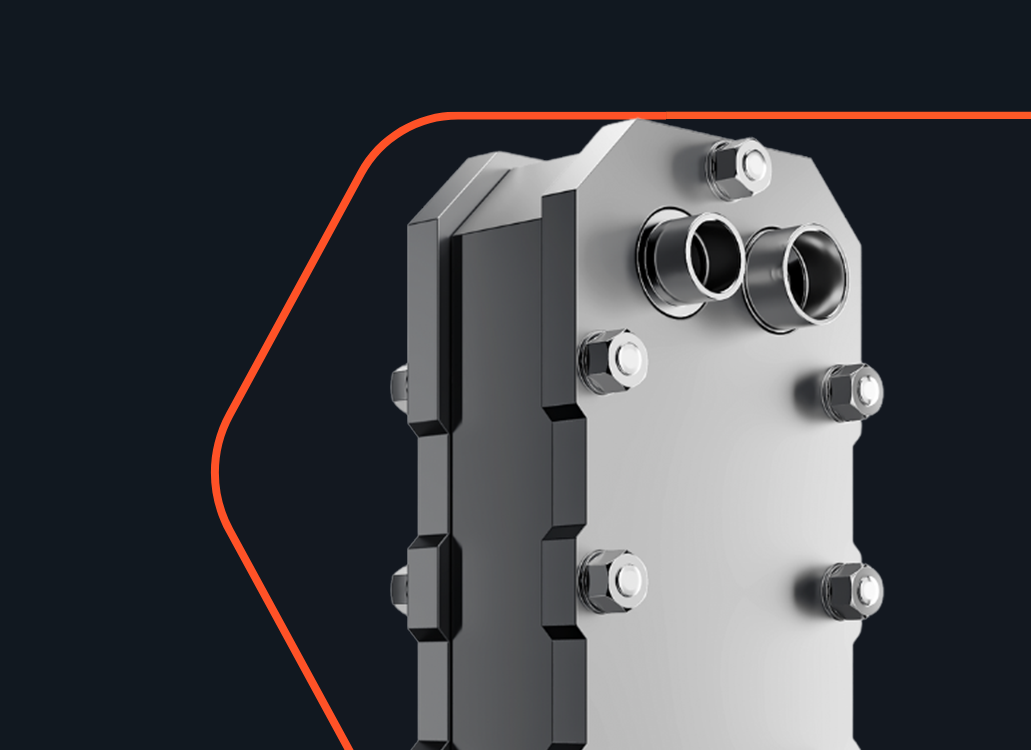
- Plate & Frame — large-capacity district heating, cooling tower applications
- Dry Coolers — outdoor air-cooled heat rejection for chiller and process cooling
Explore HEXONIC’s full range of HVAC heat exchangers — including brazed plate, plate & frame, and dry coolers.
Use CAIRO selection software or contact our engineering team for sizing support.
Frequently Asked Questions
What size heat exchanger do I need for a heat pump?
Heat pump heat exchanger sizing depends on the thermal output (kW), refrigerant type, evaporation and condensation temperatures, and flow rates on both circuits. HEXONIC’s CAIRO online selection tool calculates the optimum heat exchanger for heat pump duty based on your system parameters. Contact our technical team for complex sizing support.
Can I use a brazed plate heat exchanger with glycol?
Yes. Standard copper-brazed plate heat exchangers are fully compatible with inhibited propylene glycol and ethylene glycol solutions at typical HVAC concentrations. Consult the HEXONIC technical datasheet for fluid compatibility limits.
How often does an HVAC heat exchanger need to be serviced?
Brazed plate heat exchangers in clean, treated water circuits typically require only periodic CIP (cleaning-in-place) chemical cleaning — often every 2–5 years depending on water quality. Gasketed plate exchangers should have gasket condition inspected during planned maintenance shutdowns.