The food and beverage industry places uniquely demanding requirements on heat exchanger design. Beyond the standard engineering parameters of pressure, temperature, and thermal duty, food-grade heat exchangers must meet strict hygiene standards, be constructed from approved materials, be cleanable to a defined standard, and in many cases be verifiable as safe for direct contact with food products.
This guide covers the key hygiene requirements, material standards, and design features that distinguish food-grade heat exchangers from standard industrial models — and how to select the right unit for your processing application.
Why Hygiene Design Matters
A heat exchanger used in food processing is not simply a piece of thermal equipment — it is part of the product contact surface. Bacteria, biofilm, product residue, and cross-contamination risks must all be eliminated by design. In a pasteurisation system, for example, the heat exchanger is the critical control point for pathogen elimination. If the exchanger cannot be cleaned effectively and verified as hygienic, it becomes a food safety risk.
In addition to food safety, regulatory requirements in the EU, UK, and internationally specify approved materials, surface finishes, and documentation requirements for food contact equipment.
Key Hygiene Standards and Regulations
- EU Regulation 1935/2004 — framework regulation for materials and articles intended to contact food
- 3-A Sanitary Standards (USA) — widely referenced global standard for hygienic equipment design
- EHEDG Guidelines — European Hygienic Engineering and Design Group guidelines for hygienic equipment
- FDA 21 CFR — US Food and Drug Administration regulations for food contact materials
- HACCP requirements — Hazard Analysis Critical Control Points compliance for food processing equipment
Material Requirements for Food-Grade Heat Exchangers
Stainless Steel Grades
All food-grade heat exchangers must be constructed from stainless steel. The two primary grades used are:
- AISI 316L (1.4404) — the standard specification for food-grade heat exchangers. The low-carbon ‘L’ variant provides better corrosion resistance in welded assemblies and superior resistance to chloride-containing cleaning agents and food products
- AISI 304 (1.4301) — acceptable for less demanding food applications where chloride exposure is limited, but 316L is the preferred specification for maximum hygiene performance
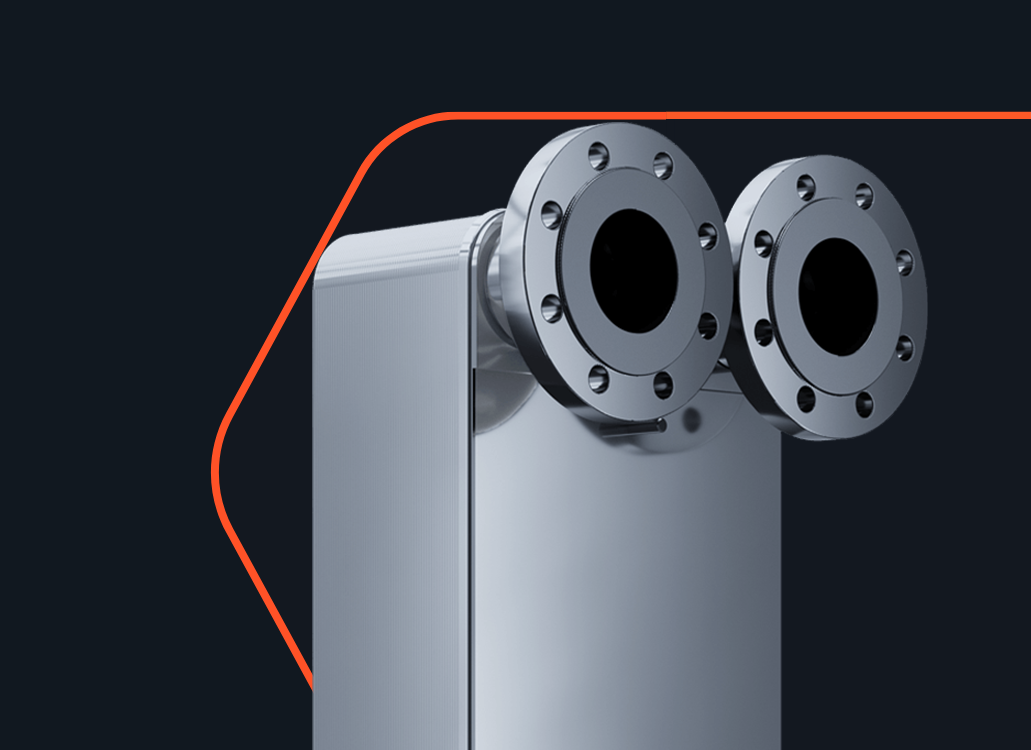
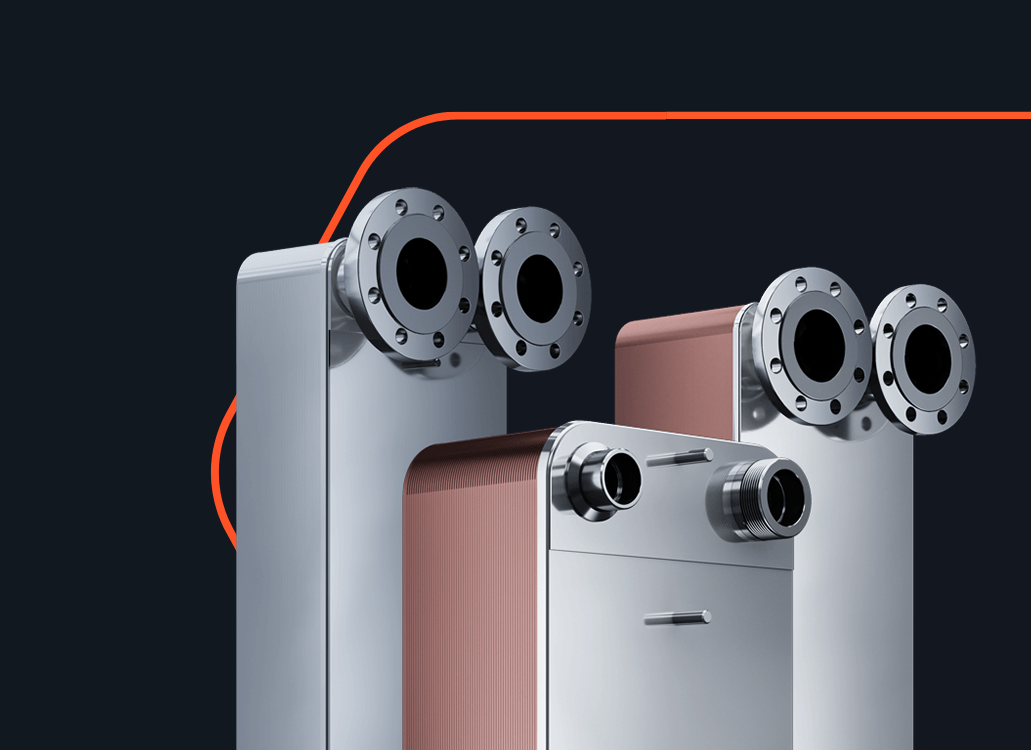
Copper-brazed heat exchangers are not suitable for direct food contact applications. The HEXONIC LUNA series uses all-stainless steel construction — including stainless brazing — making it the correct choice for food processing duty.
Surface Finish
Internal surfaces must be smooth enough to prevent product adhesion and biofilm formation, and to allow effective cleaning. The standard specification for food-grade plate heat exchangers is a Ra (average roughness) value of 0.8 μm or better on product-contact surfaces, with electropolishing sometimes specified for the most demanding applications.
Cleanability: CIP and COP
Food-grade heat exchangers must be cleanable to a defined microbiological standard. Two cleaning approaches are used:
- CIP (Cleaning-in-Place) — chemical cleaning solution is circulated through the heat exchanger without disassembly. Brazed plate heat exchangers like the HEXONIC LUNA support CIP with approved alkaline and acid cleaning agents
- COP (Cleaning-out-of-Place) / Manual disassembly — gasketed plate and frame heat exchangers can be fully disassembled for manual mechanical cleaning and inspection, making them suitable for the most demanding hygiene requirements or for applications with high fouling risk
Double-Wall Design: Preventing Cross-Contamination
In applications where the primary heating circuit uses water that must be kept completely separate from the food product — such as domestic hot water preparation or indirect pasteurisation — a double-wall heat exchanger is often specified. The HEXONIC SafePLATE uses a double-wall plate design that creates a visible leak path between the two circuits if a plate develops a defect, preventing cross-contamination.
HEXONIC Products for Food Industry Applications
- LUNA Series — all-stainless brazed plate heat exchanger designed for food and pharmaceutical applications. Stainless brazing eliminates copper, meeting the strictest food contact material requirements
- SafePLATE — double-wall brazed plate exchanger for potable water and food safety applications where cross-contamination prevention is critical
- Plate & Frame (Gasketed) — available with food-grade EPDM or NBR gaskets; fully disassemblable for mechanical cleaning and inspection
Common Food Industry Applications
- Milk and dairy pasteurisation
- Beverage heating and cooling (juices, beer, soft drinks)
- Edible oil processing
- Sugar and starch processing
- Bakery and confectionery ingredient temperature control
- Potable water heating in food production facilities
- CIP system heat exchangers
Explore HEXONIC’s LUNA and SafePLATE food-grade heat exchangers – designed for the highest hygiene standards in food and beverage processing.
Frequently Asked Questions
Can a copper-brazed heat exchanger be used in food processing?
Standard copper-brazed brazed plate heat exchangers are not approved for direct food contact applications. For food processing duty, use the HEXONIC LUNA all-stainless series or appropriate plate and frame models with food-grade gaskets.
What gasket material should I specify for food processing?
EPDM (ethylene propylene diene monomer) is the standard food-grade gasket material for plate and frame heat exchangers, suitable for most food and beverage applications. NBR (nitrile rubber) is used for oil-based applications. Confirm gasket material compatibility with your specific product chemistry.
Do HEXONIC food-grade heat exchangers come with material certificates?
Yes. HEXONIC supplies material test certificates (MTCs) for stainless steel components used in food-grade heat exchangers. FDA compliance documentation and 3-A certification support are available on request. Contact the HEXONIC sales team for documentation requirements.