When specifying a heat exchanger for an industrial or commercial application, one of the most common decisions engineers face is the choice between brazed plate heat exchangers (BPHEs) and plate and frame (gasketed) heat exchangers.
Both designs offer significant advantages over traditional shell and tube technology in terms of compactness and thermal efficiency — but they serve different purposes, and choosing the wrong type can mean higher costs, maintenance headaches, or performance shortfalls. This guide breaks down the key differences to help you make the right selection for your application.
How Each Type Works
Brazed Plate Heat Exchangers
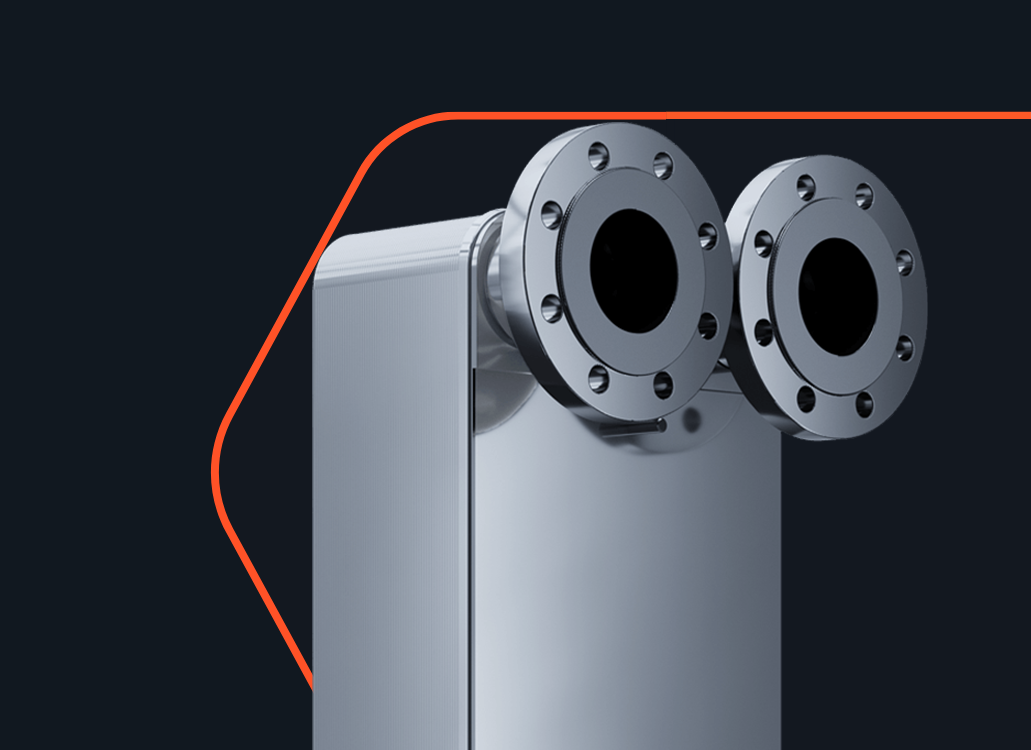
A brazed plate heat exchanger consists of a series of thin, corrugated metal plates — typically stainless steel — permanently bonded together by vacuum brazing using copper or nickel filler. The plates create alternating flow channels for the two fluids, and the brazing creates an entirely leakproof, gasket-free assembly.
Because they have no gaskets, no bolts, and no frame, BPHEs are exceptionally compact and lightweight. A HEXONIC L series unit, for example, can deliver the same thermal duty as a much larger shell and tube unit at a fraction of the installed space.
Plate and Frame Heat Exchangers
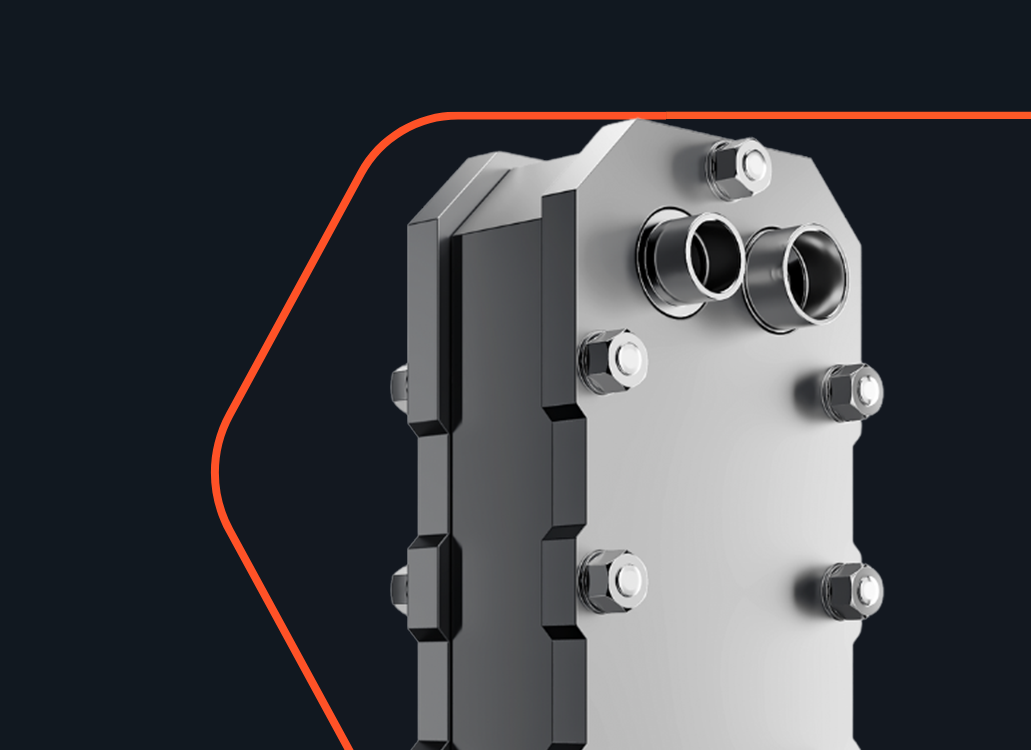
A plate and frame (gasketed) heat exchanger also uses corrugated plates, but these are held together mechanically by a steel frame and tightened with bolts. Gaskets between each plate provide the seal between the two fluid streams. The key advantage is that the unit can be disassembled — plates can be added, removed, or replaced without specialist equipment or welding.
Key Differences at a Glance
| Factor | Brazed Plate (BPHE) | Plate & Frame (Gasketed) |
| Maintenance | None required — no gaskets to replace | Periodic gasket inspection and replacement |
| Max Pressure | Up to 45 bar (140 bar for L ULTRA CO2 models) | Typically up to 25 bar |
| Max Temperature | Up to 225°C | Up to 180°C (gasket-dependent) |
| Cleaning | Chemical CIP cleaning only | Can be fully disassembled and mechanically cleaned |
| Capacity Flexibility | Fixed — cannot be modified after manufacture | Flexible — plates can be added or removed |
| Size & Weight | Very compact and lightweight | Larger footprint due to frame and bolts |
| Initial Cost | Lower | Higher (frame, gaskets, bolts) |
| Long-term Cost | Low (no parts to replace) | Higher (gasket replacement over time) |
| Best For | HVAC, refrigeration, DHW, compact installations | Industrial, food processing, large flow applications |
When to Choose a Brazed Plate Heat Exchanger
BPHEs are the preferred choice when:
- Space is at a premium — compact installations, wall-mounted systems, or skid-built packages
- The application involves refrigerants — BPHEs are purpose-built for evaporators and condensers in heat pumps and refrigeration systems
- High pressure operation is required — standard BPHEs handle up to 45 bar, and high-pressure models like the HEXONIC L ULTRA go up to 140 bar for CO2 systems
- Low maintenance is critical — in unmanned plant rooms or remote installations where access is difficult
- Fluid compatibility is straightforward — both fluids are clean and non-fouling
Typical BPHE applications include district heating substations, heat pump condensers, domestic hot water preparation, chiller economisers, and refrigerant evaporators.
When to Choose a Plate and Frame Heat Exchanger
Plate and frame exchangers are the better choice when:
- The duty requirements are likely to change — the ability to add plates makes them ideal for expandable systems
- Regular cleaning is required — food processing, dairy, and pharmaceutical plants need exchangers that can be inspected and cleaned between plates
- Flow rates are large — plate & frame units can be built to very large capacities
- One or both fluids are viscous, suspended, or fouling — the wider channels in some plate designs accommodate harder-to-handle media
Common plate & frame applications include district heat networks, large industrial process cooling, food pasteurisation, brewery heat recovery, and seawater applications.
What About Mixed Applications?
Some facilities run both types — BPHEs in the refrigeration circuit for their compactness and high-pressure rating, and plate & frame units in the process side where maintenance access and cleaning are priorities. HEXONIC supplies both types and can advise on the optimal configuration for your specific system.
View the HEXONIC range of brazed plate and plate & frame heat exchangers – or contact our engineering team to discuss your application requirements.
Frequently Asked Questions
Can a brazed plate heat exchanger be repaired?
Unlike gasketed plate exchangers, BPHEs cannot be disassembled or repaired if internally damaged. However, with correct fluid selection and CIP cleaning procedures, they are extremely durable. Fouling or corrosion issues are typically a result of incompatible fluid chemistry rather than product failure.
Are brazed plate heat exchangers suitable for drinking water?
Yes, with the right model selection. The HEXONIC SafePLATE double-wall design prevents cross-contamination between circuits and is approved for potable water applications. The LUNA all-stainless model is also suitable for direct contact with drinking water.
Can I replace a brazed plate exchanger with a plate and frame unit?
In most cases, yes — the thermal duty and pressure drop characteristics are similar enough for substitution with appropriate resizing. Contact the HEXONIC engineering team for assistance with replacement specifications.