Data Centers
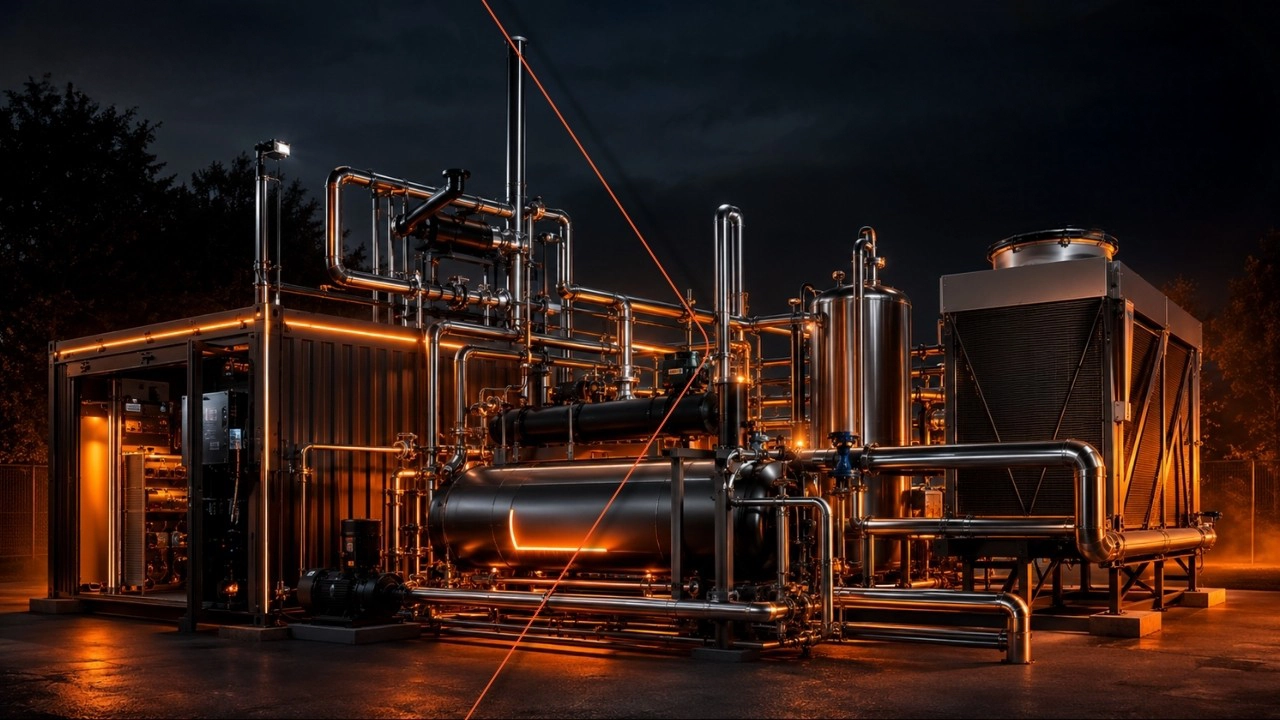
The architecture of cooling in modern Data Centers is shifting toward liquid cooling systems, where heat exchange between the IT technology loops and the building infrastructure becomes a key element of system stability.


The architecture of cooling in modern Data Centers is shifting toward liquid cooling systems, where heat exchange between the IT technology loops and the building infrastructure becomes a key element of system stability.
Key infrastructure for AI, HPC, and high-power density environments has undergone a fundamental transformation in recent years. The growing demand for computing power, driven by the development of artificial intelligence, HPC, and GPU accelerators, has led to a rapid increase in power density in server racks.
While typical loads were 5–10 kW per rack not long ago, installations of 50–100 kW, and in the case of AI systems even more, are now increasingly common. Under these conditions, traditional air cooling reaches its efficiency limits.
As a result, cooling architecture in modern Data Centers is moving toward liquid cooling systems, where heat exchange between the IT technology loops and the building infrastructure becomes a critical element of system stability.
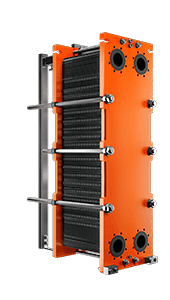
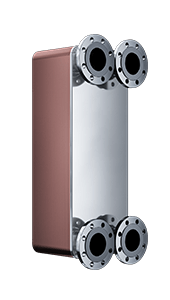
At the center of these systems is a component often overlooked in discussions about Data Center infrastructure: the heat exchanger.